
"giant tortoise"
300 article(s) found

Galapagos Coffee single Bean Flavor description Variety planting Development History of production area treatment
Ecuador Ecuadorian population: 15224000 Ecuadorian coffee is increasingly prominent in the boutique coffee industry, and although low-lying areas are unlikely to produce good coffee, higher elevations have great potential. GALAPAGOS Galapagos Islands GALAPAGOS produces a small amount of coffee in the Galapagos Islands, where supporters claim that the climate model

Introduction to varieties and flavors of Ecuadorian Coffee Manor with well-balanced and refreshing taste
The Arabian Coffee Tree was first introduced to Ecuador (Ecuador) in 1952 and its coffee is of good quality, especially the coffee harvested in early June. Ecuadorian coffee beans can be divided into two varieties: Galapagos and Gigante, both of which have the characteristics of large granules and heavy weight. Ecuadorian coffee can be divided into first class (No.1) and super excellent (ExtraSuperior) according to its quality.

Description of flavor and aroma characteristics of boutique coffee beans in Santa Cruz Manor of Ecuador with balanced acidity
In the mid-15th century, there were legends about enchanted mysterious islands among fishermen fishing in the western Pacific Ocean of South America. It is said that the islands can sometimes be seen clearly from a distance, but when the ship approaches, it disappears again; sometimes it looks like a galleon, sometimes it shows the shape of a witch. The fishermen called these islands Magic Island and thought it was there.

A very balanced and refreshing coffee from Santa Cruz in the Galapagos Islands of Ecuador
Although the coffee in Ecuador is not well known, it tastes very balanced and refreshing, and it has a unique aroma. It mainly produces Arabica coffee and Robbins coffee. Try the local coffee, which will surprise you. The Arabian Coffee Tree was first introduced to Ecuador (Ecuador) in 1952 and its coffee is of good quality, especially the coffee harvested in early June.

Ecuadorian Coffee Manor with unique Natural Geographical conditions the Origin and Development History of Santa Cruz Manor
When Thomas and the crew landed on the island, they were frantically looking for water and were so thirsty that they squeezed juice from the fat leaves of the cactus to drink. At last a source of water was found in a rocky gully. Thomas attributed it to the gift of God, because it was good Friday, and they had piously celebrated mass before they set out in search of water. But Thomas will never

A brief introduction to the history and culture of the origin and development of Galapagos boutique coffee beans with balanced acidity
In the mid-15th century, there were legends about enchanted mysterious islands among fishermen fishing in the western Pacific Ocean of South America. It is said that the islands can sometimes be seen clearly from a distance, but when the ship approaches, it disappears again; sometimes it looks like a galleon, sometimes it shows the shape of a witch. The fishermen called these islands Magic Island and thought it was there.

Fragrant Ecuadorian coffee flavor and taste introduction of boutique coffee beans in manor production area
Central mountain: after entering Ecuador from Colombia, the Andes is divided into the eastern and western Cordillera mountains, with a plateau high in the north and low in the south, averaging between 2500 and 3000 meters above sea level. The Andes run through the middle of the border. The ridges crisscross, dividing the plateau into more than ten intermountain basins. The most important are the Quito basin and the Cuenca basin in the south. Volcanic crowds in the territory

Ecuadorian coffee single bean growing area Growing characteristics Flavor description
Professional barista exchanges, please pay attention to coffee workshop (Weixin Official Accounts cafe_style ) GALAPAGOS is an island located directly below the equator in the Pacific Ocean. It is a famous tourist attraction. The island has many important unique ecology and species, such as giant tortoises, GALAPAGOS penguins, etc. Therefore, it is listed as a self-employed by the United Nations Educational, Scientific and Cultural Organization (USECO).

Ecuadorian Coffee Farm Hadassen Coffee Garden introduces Ecuadorian coffee bean flavor
Ecuador is one of the few countries in South America that produces both Arabica and Robbins. However, as the land suitable for Arabica coffee trees is decreasing, the production of Robbins coffee is gradually increasing. The best Arabica coffee comes from the Andes, especially the Chanchagu Valley (Chanchamgo Valley), which is divided into two mountains from the south.

A brief introduction to the flavor and taste characteristics of boutique coffee in Santa Cruz Manor, Ecuador
Central mountain: after entering Ecuador from Colombia, the Andes is divided into the eastern and western Cordillera mountains, with a plateau high in the north and low in the south, averaging between 2500 and 3000 meters above sea level. The Andes run through the middle of the border. The ridges crisscross, dividing the plateau into more than ten intermountain basins. The most important are the Quito basin and the Cuenca basin in the south. Volcanic crowds in the territory

Description of varieties and Flavor of Ecuadorian Coffee introduction to Fine Coffee Bean Manor
The minerals are mainly oil, mainly distributed in Guayaquil Bay, and oil fields are also found in the Amazon Plain. Gold and silver are distributed in Machaki and Saluma and other places. Copper is made in Machaki. There are sulfur mines in the Cologne Islands. In addition, there is iron, lead and so on. The forest area accounts for about 68% of the country's area, mostly in the eastern region, rich in valuable wood, such as mahogany and ointment.

Introduction to Santa Cruz Manor
The best Ecuadorian coffee is grown on St. Cristobal Island in the Galapagos Islands, which has the unique natural geographical conditions for giving birth to the best quality coffee in the world. A cup of Galapagos coffee, like the beautiful scenery of the Galapagos Islands, is sure to impress you. In the mid-15th century, fishermen fishing in the western Pacific Ocean of South America were in the middle stream.

Flavor description of Ecuadorian Coffee Variety producing area taste characteristics introduction of high-quality coffee beans
The Republic of Ecuador is located in northwestern South America. It is bordered by Colombia in the northeast, Peru in the southeast and the Pacific Ocean in the west. It covers an area of 256370 square kilometers and the coastline is about 930km long. The equator runs through the north of the border, and Ecuador means the western coast of the Spanish equator: including coastal plains and foothills, high in the east and low in the west, generally below 200 meters above sea level, with some seas

Introduction of Ecuadorian Coffee Flavor and Fine Coffee Manor
The best Ecuadorian coffee is grown on St. Cristobal Island in the Galapagos Islands, which has the unique natural geographical conditions for giving birth to the best quality coffee in the world. A cup of Galapagos coffee, like the beautiful scenery of the Galapagos Islands, is sure to impress you. In the mid-15th century, fishermen fishing in the western Pacific Ocean of South America were in the middle stream.

Why does coffee grow in the Galapagos Islands? is it expensive?
The Galapagos Islands is an archipelago of 21 islands, about 1000 kilometers off the coast of Ecuador. These islands are an once-in-a-lifetime place with exotic wildlife, magnificent scenery and subtropical climate. But what's it like not just living there, but growing coffee in such a remote place? Please read on to learn more about the

Introduction to the characteristics of coffee flavor and taste manor of balanced and refreshing Hasunda Coffee Garden in Ecuador
The Ecuadorian national flag is rectangular, with a ratio of length to width at 2:1. The flag is made up of three rectangles connected by yellow, blue and red. Yellow occupies 1 quarter of the flag, while red and blue each account for 4. The national emblem is painted in the central government. Yellow symbolizes the wealth, sunshine and food of the country; blue symbolizes the blue sky, the sea and the magnificent Amazon; and red symbolizes the blood of patriots fighting for freedom and justice. Ecuador implements the president

Ecuador Coffee Region Manor Introduction Boutique Coffee Bean Santa Cruz Manor Galapagos Islands
The best Ecuadorian coffee is grown on San Cristobal Island in the Galapagos Islands, where natural conditions are unique to the best coffee houses in the world. A cup of Galapagos coffee, like the beautiful scenery of the Galapagos Islands, is sure to impress you. Midstream fishermen fishing in the Pacific Ocean off western South America in the mid-15th century

Fragrant Ecuadorian Coffee Manor flavor and taste characteristics of fine coffee beans
Central mountain: after entering Ecuador from Colombia, the Andes is divided into the eastern and western Cordillera mountains, with a plateau high in the north and low in the south, averaging between 2500 and 3000 meters above sea level. The Andes run through the middle of the border. The ridges crisscross, dividing the plateau into more than ten intermountain basins. The most important are the Quito basin and the Cuenca basin in the south. Volcanic crowds in the territory

Introduction to the Manor Grinding scale of Ecuadorian Coffee
In 1535, Flatoma de Belanga and others of Spain stumbled upon the Galapagos Islands. Thomas was born in 1487 on the Duro River in the province of Soria, Spain. He was the fourth bishop of Panama at that time. He was ordered to go to Peru. When his ship set sail from Panama on February 23, under the impact of a strong current, they were taken to the unknown surface of the ocean.
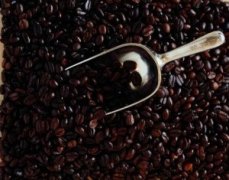
Ecuadorian coffee beans from South American boutique coffee producing area
Coffee origin: the Ecuadorian Arabian Coffee Tree was first introduced to Ecuador (Ecuador) in 1952 and its coffee quality is very good, especially the coffee harvested in early June. Ecuadorian coffee beans can be divided into two varieties: Galapagos and Gigante, both of which have the characteristics of large granules and heavy weight. Ecuadorian coffee can be divided into first class (No.1) and special coffee according to quality.